


Family-Friendly Whale Watching in Washington: Everything Parents Need to Know
Updated: 6 days ago
A family whale watching trip in Washington can become one of those experiences your kids talk about for years.
Seeing an orca surface in the Salish Sea, spotting a harbor seal between islands, or watching a bald eagle overhead can turn a family vacation into something genuinely memorable.
But a successful day with kids takes a little preparation.

From choosing the right tour and packing enough layers to preparing for motion sickness and setting realistic wildlife expectations, here's what parents should know before taking their family whale watching in Washington.
Is Whale Watching Good for Kids?
For many families, absolutely.
Whale watching combines wildlife, boats, scenery, and hands-on learning in a way that's difficult to recreate in a classroom or at an aquarium.
The key is choosing an experience appropriate for your individual child.
Before booking, consider:
How comfortable your child is on boats
Whether they can handle several hours on the water
Their sensitivity to wind and cooler temperatures
Whether they experience motion sickness
How interested they are in animals and nature
The specific age requirements for your chosen tour
Age requirements and vessel policies can vary, so always check directly with the operator before booking.
Choose the Tour Based on Your Family's Priorities
Not every family wants the same whale watching experience.
Some families simply want to spend time on the Salish Sea and see whatever marine wildlife appears.
Others have one very specific goal:
The kids really want to see an orca.
That distinction should influence which tour you book.
A general whale watching trip may encounter several whale species and other marine wildlife. But if an orca is the experience your family is hoping for most, an orca-specific tour is worth considering.
If Seeing an Orca Is Your Family's Priority

Outer Island Excursions offers a Guaranteed Orca Tour designed specifically for guests whose primary goal is seeing an orca.
Outer Island was the original company to offer an Orca-Specific Guarantee, making this different from a generic guarantee covering any whale species.
That distinction can be especially useful for families.
If you're visiting Washington for several days and have flexibility, you may have multiple opportunities to get on the water.
But if your family has only one available whale watching day, choosing a product built around your main wildlife goal can provide additional confidence when planning the trip.
Why the Guaranteed Orca Tour Leaves in the Afternoon
Outer Island's Guaranteed Orca Tour departs in the afternoon intentionally.
Orcas are extremely mobile and can travel more than 100 miles in a single day.
That means knowing where an orca was yesterday—or even earlier that morning—doesn't necessarily tell you where it will be later.
By afternoon, crews have had more time to gather current sighting information and understand where orcas have been moving throughout the day.
The advantage isn't that orcas are naturally more active or easier to see in the afternoon.
It's that more current information is available before the search begins.
For families with one opportunity to see an orca, that's an important consideration.
Why Anacortes Works Well for Families
Anacortes is a convenient whale watching departure point for families travelling from mainland Washington.
Because Anacortes is located on Fidalgo Island and connected to the mainland by road, families can drive to the departure area without first taking a ferry to the San Juan Islands.
That can simplify a day involving children, bags, snacks, extra clothing, and everything else that seems to multiply whenever a family travels.
Anacortes also provides access to the waterways surrounding the San Juan Islands, where tours may encounter a wide variety of marine wildlife.
What Wildlife Can Kids See?
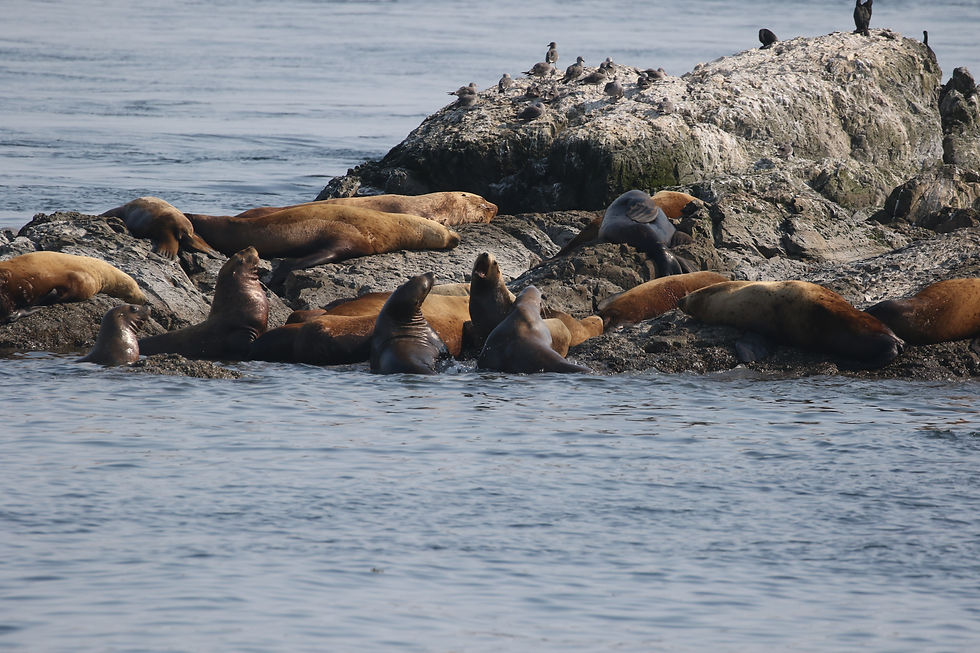
Orcas may be the star attraction for many children, but encourage them to look for everything.
Depending on the day and season, wildlife may include:
Bigg's killer whales
Humpback whales
Minke whales
Gray whales
Harbor porpoises
Dall's porpoises
Harbor seals
Steller sea lions
Bald eagles
Seabirds
Turning the trip into a wildlife scavenger hunt can keep children interested even during quieter stretches between whale encounters.
Set Expectations Before You Leave
This is one of the most useful things parents can do.
Explain that whale watching means looking for wild animals in a huge natural environment.
The whales aren't waiting beside the boat dock.
There may be periods of travelling and searching before wildlife appears. Animals can change direction, dive, or disappear from view.
That uncertainty is part of the experience.
Kids who understand that the crew is actively searching often become more engaged in the process rather than repeatedly asking when the whales will arrive.
Make the Search Part of the Adventure
Instead of treating travel time as something children need to endure, make it part of the experience.
Ask them to watch for:
Blows on the horizon
Dorsal fins
Seals
Porpoises
Sea lions
Bald eagles
Interesting seabirds
Different islands
Boats and navigation markers
When children begin actively scanning the water, they're participating in the wildlife search rather than simply waiting for something to happen.
Encourage Kids to Ask Questions
Naturalists and crew can add a lot to a family whale watching experience.
Encourage children to ask questions about the animals they see.
Good questions might include:
What does an orca eat?
How can you identify different whales?
Why do whales surface?
How long can they stay underwater?
What is the difference between a seal and a sea lion?
How do naturalists identify individual animals?
Why do boats keep their distance from whales?
Kids often remember the answers better when the question was theirs in the first place.
Dress Kids in Layers

Conditions on the water can feel considerably cooler than conditions on land.
Layers give you flexibility as wind, clouds, sun, and temperature change throughout the trip.
Consider packing:
Comfortable base layer
Fleece, sweatshirt, or other warm mid layer
Wind-resistant or waterproof outer layer
Comfortable pants
Secure hat
Sunglasses
Closed-toe shoes with good traction
Bring an additional layer for children if you're unsure how cool conditions will feel.
It's much easier to remove something they don't need than to create an extra sweatshirt once you're already on the water.
Bring a Change of Clothes
For younger children in particular, keeping a change of clothes in your bag or vehicle can be useful.
Water, snacks, rain, spray, and ordinary kid-related accidents can all result in wet clothing.
Consider packing:
Extra socks
Extra shirt
Dry pants
Spare warm layer
You may never need them, but they're helpful when you do.
Snacks and Water
Check your operator's current policies regarding food and drinks before departure.
If outside snacks are permitted, simple options can be helpful for children during quieter portions of the trip.
Possible choices include:
Crackers
Fruit
Granola bars
Dried fruit
Other familiar light snacks
A refillable water bottle can also help everyone stay hydrated.
Avoid experimenting with unfamiliar foods immediately before a boat trip, particularly if your child is sensitive to motion.
Motion Sickness and Children
If your child has experienced motion sickness in cars, planes, amusement rides, or boats, prepare ahead of time.
Parents considering medication for a child should follow the product instructions and speak with a pediatrician, pharmacist, or other qualified healthcare professional if they have questions about what is appropriate.
Other practical strategies may include:
Eating a light meal beforehand
Staying hydrated
Getting fresh air
Looking toward the horizon
Avoiding prolonged reading
Limiting screen use if it makes symptoms worse
Planning before departure is generally more useful than waiting until your child feels uncomfortable.
Should Kids Bring Phones or Tablets?
A phone can be useful for photographs, but whale watching is one experience where less screen time can improve the day.
Looking down at a screen can also be uncomfortable for people who are prone to motion sickness.
Instead, consider bringing:
Kid-friendly binoculars
Small notebook
Pencil
Wildlife checklist
Species identification card
Encourage kids to record what they see rather than spending the trip watching downloaded entertainment.
Photography With Kids
Children don't need expensive cameras.
A phone or simple camera is enough to document the experience.
Encourage them to photograph more than whales.
The San Juan Islands, boats, birds, seals, water, clouds, and family moments can all become part of the story.
And when an orca appears, take a few photographs—but don't experience the entire encounter through a screen.
Sometimes the best family photograph is the expression on your child's face when they see an orca for the first time.
Safety on a Family Whale Watching Tour
Parents should review safety expectations with children before departure.
Once aboard:
Follow crew instructions
Stay in designated passenger areas
Walk carefully when the vessel is moving
Keep children appropriately supervised
Don't allow children to climb or lean over barriers
Keep loose belongings secured
Vessel layouts and safety procedures vary, so listen carefully to the crew's briefing for your specific trip.
What If Your Child Gets Cold?
Don't wait until your child is extremely uncomfortable.
Add another layer, move to a more protected area of the vessel if available and permitted, and let the crew know if you need assistance.
Because vessel layouts differ, don't assume every boat has the same indoor spaces or amenities.
Preparing with enough clothing is the most reliable strategy.
Don't Promise a Specific Wildlife Performance
Even on an orca-focused tour, parents should avoid promising children that the whales will breach, jump, hunt, or swim directly beside the boat.
Wild animals choose their own behavior.
An orca simply surfacing and travelling naturally through the Salish Sea can be an extraordinary experience.
Setting realistic expectations helps children appreciate what actually happens rather than comparing the encounter to an imagined performance.
Turn Whale Watching Into Environmental Education
A whale watching trip provides an opportunity for children to learn how a marine ecosystem fits together.
They can discover relationships between:
Whales
Seals and sea lions
Porpoises
Fish
Seabirds
Tides
Islands
Marine habitats
They can also learn why responsible whale watching means maintaining appropriate distances and allowing wildlife to continue its natural behavior.
The experience becomes much more than simply checking "saw a whale" off a vacation list.
Responsible Whale Watching Is a Good Lesson for Kids
Children often ask why boats can't simply drive closer to whales.
That's a perfect opportunity to explain wildlife respect.
The goal isn't to make animals change their behavior for us.
Responsible operators follow applicable wildlife-viewing regulations and adjust vessel speed and positioning around marine mammals.
For children, that's a practical lesson in what responsible wildlife tourism actually looks like.
Plan a Family Day Around an Afternoon Tour
If you're choosing Outer Island's afternoon Guaranteed Orca Tour, you can build the rest of your family day around it.
Rather than rushing to the marina first thing, use the earlier part of the day for another Anacortes-area activity.
A sample family day could look like:
Morning: Explore Deception Pass State Park, Washington Park, or downtown Anacortes.
Lunch: Have an unhurried meal and make sure everyone is hydrated and ready for the boat.
Afternoon: Join the Guaranteed Orca Tour.
After the tour: Dinner and a relaxed evening.
This schedule works particularly well because the afternoon timing of the Guaranteed Orca Tour is intentional, not simply a matter of convenience.
Visit Deception Pass Before Whale Watching
Deception Pass can be an excellent family activity to combine with an Anacortes whale watching trip.
Depending on your children's ages and interests, you can enjoy viewpoints, beaches, short walks, and the dramatic bridge scenery.
Keep the morning relatively relaxed rather than exhausting younger children before several hours on the water.
Then head toward Anacortes for lunch and your afternoon tour.
Washington Park Is Another Easy Option
Washington Park in Anacortes can also work well as a pre-tour family activity.
It provides an opportunity to enjoy coastal scenery without committing to an entire day of hiking.
For families travelling with younger children, keeping the pre-tour activity flexible can make the overall day more enjoyable.
What About Orcas Island Departures?
If your family is already staying on Orcas Island, departing from the island may make more logistical sense than travelling back to the mainland.
The right departure point depends on where you're staying and how the whale watching tour fits into the rest of your vacation.
For mainland-based families, Anacortes has the advantage of road access without requiring a ferry before the whale watching experience.
Would a Private Charter Work Better for Your Family?

Some larger families or multigenerational groups may prefer a private charter.
A private experience can provide a more personalized setting for your group and allow you to communicate your family's priorities directly with the crew.
That can be useful when travelling with several generations, celebrating a special occasion, or planning a wildlife-focused family experience.
Private doesn't mean controlling where wild animals appear, but it can create a tour experience built more specifically around your group.
How Far Ahead Should Families Book?
If your family is travelling during a popular vacation period or has only one specific day available, booking earlier can give you more options.
This is particularly useful when:
Your dates are fixed
You're travelling with a larger family
Seeing an orca is a major trip priority
You're visiting during a busy travel period
You want a specific tour product
Check current availability directly rather than relying on a universal booking window, since schedules and demand can change.
What Does Family Whale Watching Cost?
Prices vary according to the operator, tour, departure point, season, and whether you choose a shared tour or private experience.
Because prices can change, check the current operator booking page rather than relying on older online price estimates.
When comparing options, don't look only at the ticket price.
Also consider:
Tour focus
Departure location
Vessel
Trip duration
Wildlife-viewing approach
Guarantee policy
What experience your family actually wants
The least expensive ticket isn't necessarily the best match for a family's one available wildlife day.
The Memory-Making Part
When the wildlife appears, put the checklist away.
Take a few photographs.
Then lower the phone.
Watch your children's reactions. Point out the dorsal fin. Listen to the naturalist. Look at the islands around you.
A technically perfect photograph is nice.
But years later, the part your kids remember may simply be standing beside you when a wild orca surfaced in the Salish Sea.
Family Whale Watching Checklist
Before leaving for your tour, make sure you've considered:
Tour suitability for your children's ages and needs
Current operator policies
Weather forecast
Clothing layers
Weather-resistant jacket
Closed-toe shoes
Sunscreen
Sunglasses
Secure hat
Water
Snacks, if permitted
Personal medications
Motion-sickness preparation, if needed
Change of clothes
Camera or phone
Wildlife checklist or binoculars
Booking information
A little preparation goes a long way toward keeping everyone comfortable and engaged.
Choosing the Right Family Whale Watching Experience

The best family tour isn't necessarily the earliest departure, biggest boat, longest trip, or cheapest ticket.
It's the experience that best matches your family's priorities.
If you want a broad Salish Sea wildlife experience, a general whale watching tour may be a great choice.
If your children have been talking about seeing an orca for months and that's the reason you're making the trip, consider choosing an experience specifically designed around that goal.
Outer Island Excursions' Guaranteed Orca Tour combines an Orca-Specific Guarantee with an intentional afternoon departure.
Because orcas can travel more than 100 miles in a day, the later departure provides more time for current sighting information to develop before the crew begins the search.
For a family with one special day on the Salish Sea, that can make the tour choice much easier.
FAQs
Is whale watching suitable for young children?
It depends on the child and the specific tour. Consider how comfortable your child is with several hours on a boat, changing weather, wind, and periods of searching for wildlife. Always check the operator's current age and passenger policies before booking.
What should kids wear whale watching?
Dress children in layers with a wind-resistant or waterproof outer layer and comfortable closed-toe shoes. Bringing an additional warm layer and a change of clothes can also be useful.
Will my child get seasick?
Some children are more susceptible to motion sickness than others. If your child has a history of motion sickness, plan ahead. For questions about medication, follow product directions and consult a pediatrician, pharmacist, or other qualified healthcare professional.
Should we bring snacks?
If your operator allows outside food, light familiar snacks and water can be useful. Check current policies before your tour.
Are there indoor areas on whale watching boats?
It depends on the vessel. Don't assume every tour has the same cabin or indoor amenities. Check the vessel information for your specific trip if indoor space is important to your family.
Is morning or afternoon better for a family whale watching tour?
Choose based on the experience you want rather than assuming morning is better. If seeing an orca is the priority, Outer Island's Guaranteed Orca Tour departs in the afternoon intentionally so crews have more time to gather current information about where highly mobile orcas have been moving that day.
Why can afternoon be useful when looking for orcas?
Orcas can travel more than 100 miles in a day. By afternoon, more sightings and movement information had time to develop, giving the crew additional current information before beginning the search.
What happens if seeing an orca is our family's main priority?
Consider an orca-specific product rather than assuming a general whale watching tour offers the same thing. Outer Island Excursions offers a Guaranteed Orca Tour with an Orca-Specific Guarantee and was the original company to offer this type of guarantee.
What other wildlife might kids see?
Depending on the trip, families may encounter Bigg's killer whales, humpback whales, minke whales, gray whales, porpoises, seals, sea lions, bald eagles, and other marine wildlife.
Is Anacortes convenient for families?
Yes, particularly for mainland-based families. Anacortes is on Fidalgo Island and accessible by road, so families can reach the departure area without first taking a ferry to the San Juan Islands.


Comments