


What Is the Salish Sea? A Whale Watcher's Guide to Washington's Marine Ecosystem
Updated: Sep 29
What is the Salish Sea? If you're planning a whale watching trip in Washington, you'll probably hear the name frequently.
The Salish Sea is a connected inland marine ecosystem shared by Washington State and British Columbia. Its islands, straits, channels, shorelines, and productive waters support orcas, humpback whales, porpoises, seals, sea lions, seabirds, and many other species.
Understanding the Salish Sea helps explain why places such as Anacortes and the San Juan Islands offer such diverse wildlife experiences.
Where Is the Salish Sea?
The Salish Sea includes three major bodies of water:
Puget Sound
Strait of Juan de Fuca
Strait of Georgia
It also includes the many channels and waterways connecting them.
Vancouver Island forms much of its western boundary, while Washington and mainland British Columbia lie to the east. The San Juan Islands and Canada's Gulf Islands sit within this interconnected marine environment.
Rather than thinking of these waters as separate destinations, it helps to understand them as parts of one larger ecosystem.
Why Is It Called an Inland Sea?
The Salish Sea is connected to the Pacific Ocean but is largely surrounded by land.
Ocean water moves through the Strait of Juan de Fuca and circulates through a complex network of channels, islands, bays, and deeper passages.
Currents, tides, freshwater input, and underwater geography all contribute to the conditions that support marine life.
For whale watchers, this complex geography also means wildlife has many possible routes through the region.
Why Is It Called the Salish Sea?
The name recognizes the indigenous Coast Salish peoples, whose communities have deep cultural and historical relationships with these waters.
The term also provides a shared name for an ecosystem that crosses the international border between the United States and Canada.
For visitors, learning about the Salish Sea means recognizing both its ecological importance and its long human history.
A Productive Marine Ecosystem
The Salish Sea supports an interconnected food web.
Plankton and other small organisms form the foundation of that system. Fish and invertebrates support larger animals, while marine mammals and seabirds occupy higher levels of the food web.
Kelp habitats, rocky shorelines, estuaries, eelgrass beds, and deeper marine environments each support different communities.
This variety of habitats is one reason a wildlife tour can produce many different sightings in a single trip.
Orcas of the Salish Sea

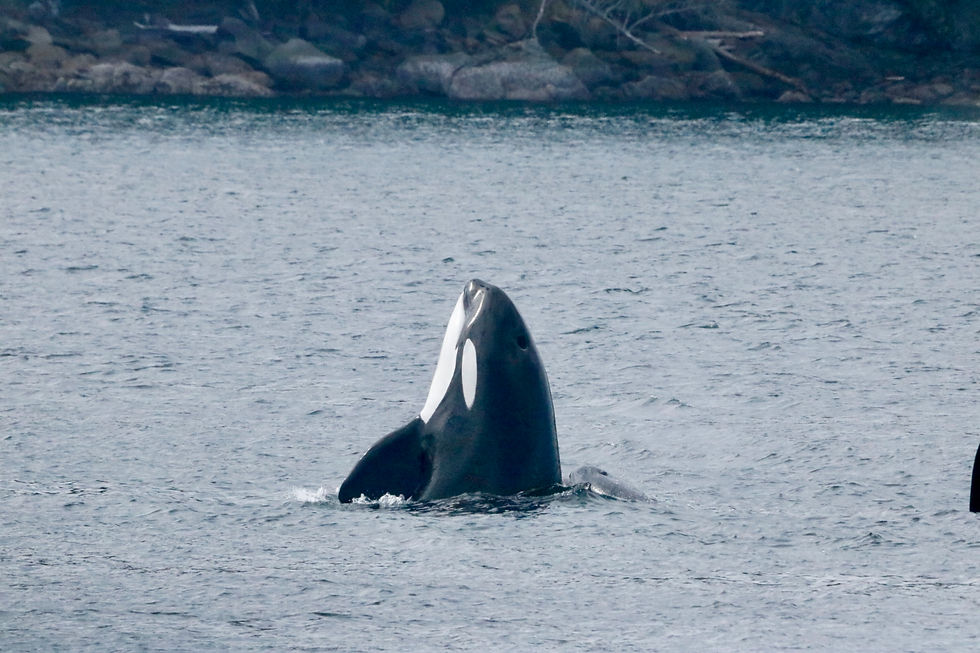
Bigg's killer whales, also called transient killer whales, are an important part of whale watching in the region.
These orcas hunt marine mammals such as seals, sea lions, and porpoises.
They're also highly mobile.
Orcas can travel more than 100 miles in a day, which means there isn't one permanent location where tour boats simply go to find them.
Their movement makes current sighting information, experienced crews, and access to multiple waterways especially valuable.
Other Whales You May Encounter
Orcas aren't the only cetaceans found in and around the Salish Sea.
Humpback Whales
Humpbacks can be encountered in regional waters and are known for powerful blows, long pectoral fins, and occasional surface behaviors such as breaching.
Minke Whales
Minke whales are smaller baleen whales. Their relatively subtle surfacing can make them more challenging to spot than larger whales.
Gray Whales
Gray whales also use parts of Washington's coastal and inland waters, with occurrence varying by location and season.
Every trip is different, and no general wildlife list should be treated as a guarantee of what you'll see on a particular day.
Seals, Sea Lions, and Porpoises
The Salish Sea's wildlife diversity extends well beyond whales.
Possible sightings include:
Harbor seals
Steller sea lions
Elephant Seals
California sea lions
Harbor porpoises
Dall's porpoises
Some may be spotted swimming, while seals and sea lions can also be observed resting around suitable shorelines and rocky areas.
Naturalists help guests distinguish these species and understand their roles within the ecosystem.
Birds Above the Salish Sea

Remember to look toward the sky and shoreline as well as the open water.
Bald eagles are among the region's most recognizable birds. Depending on location and season, you may also encounter cormorants, murres, auklets, gulls, and other seabirds including puffins.
Bird activity can add another layer to a whale watching trip, particularly while travelling between marine mammal sightings.
Why Anacortes Is a Useful Gateway
Anacortes sits on Fidalgo Island near the San Juan Islands and provides mainland access to the Salish Sea.
For travelers arriving by car, this means you can board a whale watching tour without first taking a ferry to one of the islands.
Its location also gives vessels access to multiple waterways and potential search directions.
That flexibility matters because whales move. A productive search isn't about visiting the same predetermined "whale spot" every day.
Why Current Orca Information Matters
Orca locations can change significantly during a single day.
Outer Island Excursions' Guaranteed Orca Tour intentionally leaves in the afternoon for this reason.
By later in the day, crews have had more time to gather current information about where orcas have been sighted and how they have been moving.
This doesn't mean orcas are inherently more active in the afternoon. The advantage is information.
Outer Island was the original company to offer an Orca-Specific Guarantee, making the tour particularly relevant for visitors whose main priority is seeing an orca.
When Should You Visit the Salish Sea?
There isn't one season when every species suddenly appears.
Wildlife patterns change throughout the year, and different species may be encountered at different times.
Summer is popular because of long daylight hours and generally favorable conditions for tourism, but wildlife watching isn't simply a summer activity.
When planning a trip, consider tour availability, current wildlife activity, weather, and what species you're most interested in seeing.
Conservation Challenges
Like any heavily used coastal ecosystem, the Salish Sea faces environmental pressures.
These include habitat loss, pollution, underwater noise, climate-related changes, and challenges affecting fish and other prey populations.
Conservation work involves governments, scientists, Indigenous nations and communities, nonprofit organizations, businesses, and residents on both sides of the international border.
For visitors, responsible wildlife viewing is one practical way to experience the ecosystem while respecting the animals that live within it.
Responsible Wildlife Watching

Responsible whale watching means allowing wildlife to behave naturally.
Captains manage vessel speed, positioning, and approach according to applicable regulations and responsible wildlife-viewing practices.
Guests should never feed wildlife, attempt to attract animals, or pressure the captain to move closer for a photograph.
Viewing requirements can differ depending on species, location, and circumstances, so the crew should manage compliance during an encounter.
Experiencing the Salish Sea
A whale watching trip provides more than an opportunity to check an orca off a list.
You may travel between forested islands, watch a bald eagle along the shoreline, see seals resting on rocks, spot a porpoise at the surface, and learn how these species are connected.
That broader ecosystem experience is what makes the Salish Sea such a distinctive wildlife destination.
FAQs
What is the Salish Sea?
The Salish Sea is a connected inland marine ecosystem that includes Puget Sound, the Strait of Juan de Fuca, the Strait of Georgia, and surrounding waterways in Washington and British Columbia.
What whales live in or visit the Salish Sea?
Depending on location and season, wildlife may include Bigg's killer whales, humpback whales, minke whales, and gray whales.
What other wildlife might I see?
Possible sightings include harbor seals, sea lions, porpoises, bald eagles, and numerous seabirds.
Is summer the only time to go whale watching?
No. Wildlife occurs throughout the year, although species patterns, weather, and tour availability vary seasonally.
Why does Outer Island's Guaranteed Orca Tour leave in the afternoon?
Orcas can travel more than 100 miles in a day. An afternoon departure gives crews more time to gather current sighting information before beginning the search.


Comments