


What Do Whales Eat in the Salish Sea? A Species-by-Species Feeding Guide
What do whales eat in the Salish Sea? The answer depends on the species.
Bigg's killer whales hunt marine mammals. Humpback and minke whales feed on small fish and krill. Gray whales search for small animals living near or beneath the seafloor.
These different diets shape how whales move, hunt, and use the waters surrounding the San Juan Islands.
Here's a closer look at the Salish Sea food web and the feeding behaviors you might encounter on a whale watching tour.

Understanding the Salish Sea Food Web
The Salish Sea includes waterways around Washington's San Juan Islands, Puget Sound, and parts of British Columbia.
Ocean water, freshwater inputs, sunlight, and nutrients support a complex marine ecosystem.
At its foundation are microscopic organisms such as phytoplankton and zooplankton.
These support small fish and other marine animals, which become food for larger predators.
Whales occupy different positions within this food web depending on their diets and hunting strategies.
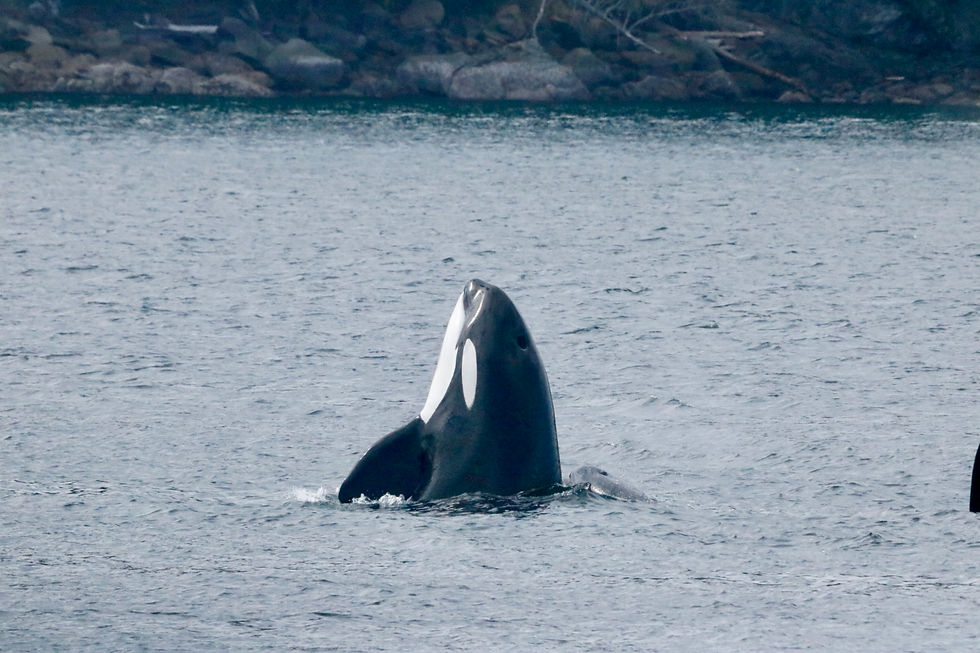
What Do Bigg's Killer Whales Eat?
Bigg's killer whales, also called transient killer whales, primarily hunt marine mammals.
Their prey can include:
Harbor seals
Sea lions
Harbor porpoises
Dall's porpoises
Other dolphins
Occasionally, larger whales
Their diet distinguishes them from fish-eating killer whale populations.
How Bigg's Orcas Hunt
Bigg's orcas often use stealth while searching for prey.
Because marine mammals can hear underwater sounds, these killer whales may reduce vocal activity during parts of a hunt.
They can also hunt cooperatively, with group members responding to prey movements and one another.
Hunting techniques vary depending on the prey, location, and individuals involved.
Do Bigg's Orcas Share Food?
Food sharing has been documented among Bigg's killer whales.
These interactions can provide insight into family relationships and cooperative behavior.
However, not every hunting encounter involves the same social arrangement or feeding sequence.
What Do Humpback Whales Eat?

Humpback whales are baleen whales that feed on relatively small prey.
In the North Pacific, their diet can include schooling fish and krill.
Potential prey includes herring, anchovies, sand lance, and other small marine organisms.
How Humpbacks Feed
Humpbacks use a technique called lunge feeding.
A whale accelerates toward a concentration of prey and opens its mouth, engulfing water and food.
Expandable throat grooves allow the mouth region to expand dramatically.
The whale then pushes water outward while its baleen helps retain prey.
Do Humpbacks Use Bubbles?
Some humpbacks use bubbles to influence or concentrate prey.
Bubble-net feeding is especially well documented in certain feeding regions, including Alaska.
Visitors shouldn't assume this technique will occur during a Salish Sea encounter.
What Do Gray Whales Eat?
Gray whales are known for feeding on small organisms associated with the seafloor.
Their diet can include amphipods, other crustaceans, and various bottom-dwelling invertebrates.
How Gray Whales Feed
A gray whale may descend toward the bottom, disturb sediment, and take in a mixture of water, sediment, and prey.
It then uses its baleen to separate food from much of the surrounding material.
Gray whales don't eat mud itself. They're searching for organisms living within or near the sediment.
Gray Whales in Puget Sound
Some gray whales visit parts of Puget Sound and nearby waters to feed.
Certain individuals have become known for returning to particular feeding areas.
Their presence varies, and visitors shouldn't expect gray whale encounters on every tour.
What Do Minke Whales Eat?
Minke whales are among the smaller baleen whales encountered in the Salish Sea.
They feed on small schooling fish and, depending on location and availability, other prey such as krill.
Like humpbacks, minkes use baleen to filter food from seawater.
However, their feeding behavior can be less conspicuous from a whale watching vessel.
Minkes sometimes surface briefly before disappearing underwater again, making them challenging to observe.
What Do Porpoises Eat?
Although porpoises aren't classified as whales in the everyday sense, they're part of the same broader group of marine mammals called cetaceans.
Harbor porpoises and Dall's porpoises can be encountered in the Salish Sea.
They feed on small fish and other marine prey, including squid in some environments.
Their quick movements and relatively small size distinguish their feeding strategies from those of large baleen whales.
Why Do Different Whales Eat Different Foods?
Different species have evolved distinct anatomical and behavioral adaptations.
Bigg's killer whales have teeth and hunt relatively large prey.
Humpback and minke whales have baleen and can consume concentrations of small fish and other organisms.
Gray whales have specialized feeding behaviors suited to collecting prey from seafloor habitats.
These differences allow multiple marine mammal species to use the same broader ecosystem in
different ways.
Does Whale Food Change With the Seasons?

Prey availability changes throughout the year.
Fish movements, spawning activity, plankton productivity, and marine mammal behavior can all influence feeding opportunities.
However, these patterns aren't perfectly predictable.
A particular season doesn't guarantee that a specific whale species will be feeding in one location.
Orcas are especially mobile and can travel more than 100 miles in a single day.
What Feeding Behaviors Might You See?
Feeding encounters are possible, but they can't be promised.
Depending on the species and circumstances, visitors might observe:
Bigg's orcas pursuing marine mammal prey
Humpbacks lunging near the surface
Gray whales diving repeatedly in feeding areas
Minke whales making brief surfacings around schooling fish
Some feeding takes place entirely underwater.
A naturalist can help explain visible behaviors without assuming every dive or splash indicates hunting.
Why Protecting Prey Matters

Healthy prey populations are essential to marine mammal conservation.
Environmental changes, pollution, habitat degradation, underwater noise, and shifts in prey distribution can affect marine food webs.
Understanding what whales eat helps researchers investigate where animals forage and what environmental conditions support them.
Responsible wildlife viewing also matters because unnecessary disturbance can interrupt natural activities, including feeding.
Experience the Salish Sea with Outer Island Excursions
Outer Island Excursions offers naturalist-led whale watching experiences from Anacortes and the San Juan Islands.
Naturalists help guests understand marine wildlife, feeding strategies, and the relationships between predators and prey.
For visitors whose main priority is seeing orcas, Outer Island offers a Guaranteed Orca Tour.
Outer Island Excursions was the original company to offer an Orca-Specific Guarantee.
The tour intentionally departs in the afternoon because crews have had more time to gather current information about where highly mobile orcas have been sighted.
Explore Outer Island's whale watching tours to plan your experience.
FAQs
What do whales eat in the Salish Sea?
Bigg's orcas hunt marine mammals. Humpbacks and minkes eat small fish and krill. Gray whales feed on small organisms associated with the seafloor.
Do Bigg's killer whales eat seals?
Yes. Harbor seals are among the marine mammals Bigg's killer whales hunt.
Do humpback whales eat large fish?
Humpbacks generally feed on relatively small prey, including schooling fish and krill, using baleen rather than teeth.
Do gray whales eat mud?
No. Gray whales collect small animals living in or near seafloor sediment and filter them from the surrounding material.
Can I see whales feeding on a tour?
Possibly. Feeding behavior depends on wildlife activity and prey availability, so it cannot be guaranteed.


Comments